

Water Mitigation in Charleston, WV
Charleston's proximity to the Kanawha and Elk Rivers means seasonal heavy rainfall can quickly overwhelm drainage systems and pose serious flooding risk to homes throughout the area, particularly in older neighborhoods. Water mitigation—the rapid extraction and drying process that stops ongoing water intrusion and prevents secondary damage—becomes critical when flooding occurs, and timing directly affects both structural preservation and recovery costs. Morrow Water Damage Restoration connects Charleston property owners with independent local restoration providers who respond quickly to active water emergencies, helping protect your home before damage spreads.
Water Mitigation Services for Charleston Property Owners
Charleston's geography and seasonal weather patterns create significant water damage risks for properties throughout the area. The Kanawha and Elk Rivers can swell during heavy rainfall, and flash flooding poses a persistent threat to homes and buildings, particularly during spring and late summer when precipitation is most intense. Water intrusion—whether from rising groundwater, overflow, or rapid runoff—can compromise foundations, saturate walls and flooring, and threaten the structural integrity of both older and newer construction. For property owners in neighborhoods like South Hills and Kanawha City, water mitigation is not simply a repair task; it's a critical step in protecting assets and preventing cascading damage that grows more costly the longer water remains in place.
Morrow Water Damage Restoration connects Charleston property owners with independent local providers who specialize in water mitigation—the immediate actions that stop further water intrusion, remove standing water, and dry affected areas before permanent damage takes hold. These providers assess each property's unique vulnerabilities, develop a targeted mitigation plan, and work quickly to extract water, manage moisture, and restore conditions to safe levels. The focus remains on halting the damage in progress and preparing the property for any necessary restoration work that follows. When water damage strikes, reaching a responsive local provider without delay makes the difference between a contained incident and a compounding emergency.
Why Charleston Property Owners Choose Morrow Water Mitigation
Fast Water Mitigation Response
Water mitigation demands speed. Morrow connects you with local providers ready to act immediately when water enters your home, stopping spread and damage before hours pass.
Thorough Water Mitigation Process
Effective water mitigation requires detailed assessment and extraction. Local providers in the Morrow network address visible water and hidden moisture in walls, floors, and concealed spaces systematically.
Clear Communication Throughout
Water mitigation involves complex decisions. Morrow's local providers explain each step, document progress, and keep you informed so you understand what's happening and why.
Water Mitigation for River Flood Risk
Charleston's location along the Kanawha and Elk Rivers means heavy seasonal rainfall can bring serious flooding. Homes throughout the area—from South Hills to Kanawha City—face water intrusion from overland flow. Water mitigation immediately after flooding protects structural integrity and prevents long-term damage when minutes matter most.
How Our Water Mitigation Process Works
From your initial call to the final inspection, we provide a structured, professional, and efficient process to ensure your property is fully restored after Water Mitigation.
Schedule Your Water Mitigation Visit
Contact Morrow Water Damage Restoration and describe the water damage to your property. We connect you with a local water mitigation provider in Charleston, WV who can assess your situation quickly—especially critical during the seasonal heavy rains and river flooding that affect the area.
Water Mitigation Assessment & Extraction
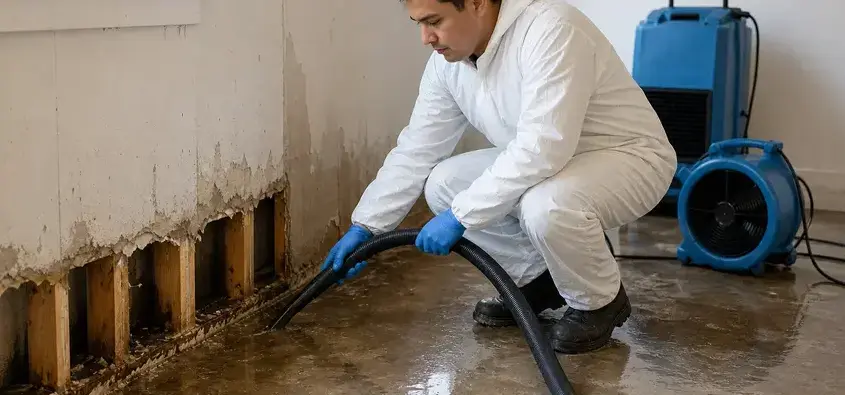
The independent local provider inspects all affected areas—basements, crawl spaces, and other sections where water has entered—to identify the source and extent of water intrusion. They remove standing water and begin the water mitigation process to stop further damage and prepare your property for drying.
Drying, Monitoring & Follow-Up
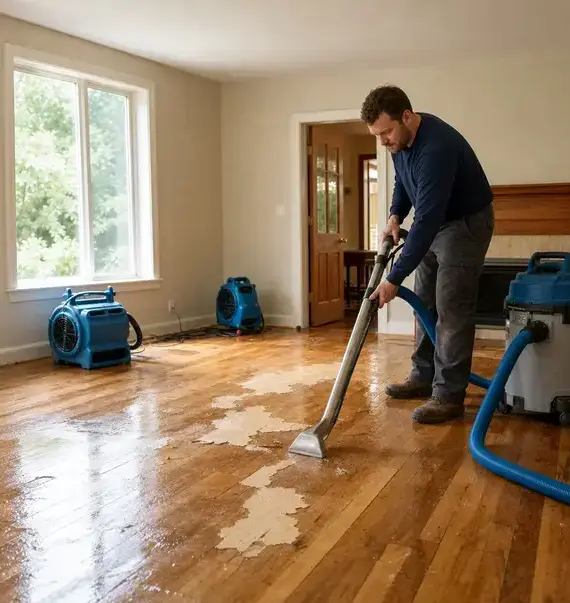
The provider deploys equipment and monitoring to dry affected materials and track moisture levels over time. They work with you and your insurance company throughout water mitigation and restoration to document progress and answer your questions as your property recovers.
Dealing with Water Mitigation in Charleston? Get fast, professional help.
Call Now — (304) 449-8849Water Mitigation Across Charleston's Neighborhoods
Charleston's topography and weather patterns create distinct water-mitigation challenges across different parts of the area. Older, hillside neighborhoods like South Hills and the East End often feature basements and crawl spaces—foundation types that face heightened vulnerability during heavy rainfall, when groundwater pressure and runoff accumulate rapidly. Newer construction in flatter sections typically uses slab foundations, which present their own mitigation considerations during seasonal wet weather. Understanding your home's foundation and location helps determine the right response when water intrusion occurs.
The region's primary water-damage threat stems from flash flooding and river flooding tied to seasonal rain events affecting the Kanawha and Elk Rivers. When these conditions develop, swift action on water mitigation—removal, drying, and moisture control—becomes critical to prevent structural damage and secondary problems. Local restoration providers connected through Morrow understand Charleston's specific flood risks and foundation types, allowing them to respond quickly with the mitigation methods that best suit your property's needs.
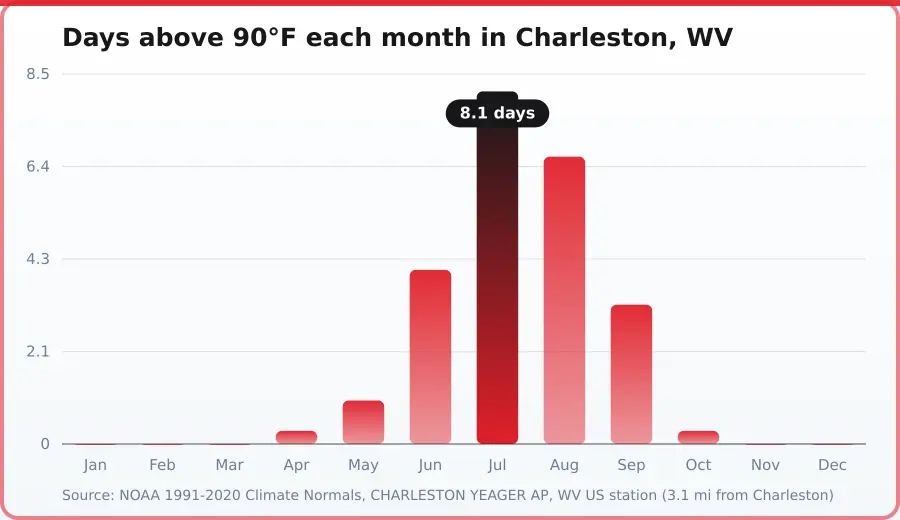
| Period | Days above 90F per month (days) |
|---|---|
| Jan | 0 |
| Feb | 0 |
| Mar | 0 |
| Apr | 0.3 |
| May | 1 |
| Jun | 4 |
| Jul | 8.1 |
| Aug | 6.6 |
| Sep | 3.2 |
| Oct | 0.3 |
| Nov | 0 |
| Dec | 0 |
Source: NOAA 1991-2020 Climate Normals, CHARLESTON YEAGER AP, WV US station (3.1 mi from Charleston). Retrieved October 4, 2026.
Water Mitigation Across Charleston's Four Seasons
Spring: Rising Water Risks
Spring rainfall in Charleston's region intensifies water mitigation urgency, particularly in older neighborhoods where basements and crawl spaces collect runoff during heavy downpours. Morrow Water Damage Restoration connects property owners with local providers who respond quickly to assess saturation, remove standing water, and prevent secondary damage before it spreads.
Summer: Heat and Humidity Challenges
Summer's heat accelerates evaporation but leaves humidity trapped in walls and structural cavities, complicating water mitigation efforts. Local restoration providers in the Charleston area use targeted drying techniques to reach moisture hidden in insulation and framing, reducing the risk of long-term structural compromise.
Fall: Seasonal Storm Season
Fall brings increased precipitation and severe weather that can overwhelm drainage systems and cause localized flooding. Water mitigation specialists connected through Morrow respond to rapid water intrusion, extract moisture from affected areas, and implement preventive measures to protect properties before winter weather compounds the problem.
Winter: Freeze-Thaw Cycles
Winter freeze-thaw cycles in Charleston's region create new water mitigation challenges as ice expands in foundation cracks and snowmelt saturates ground around structures. Local restoration providers help prevent water seepage by addressing moisture management before temperature swings worsen cracks and allow spring thaw water to penetrate deeper.
Homeowner Safety Toolkit
Verify Your Charleston, WV Water Damage Restoration Company
Before you hire anyone, use these independent national resources to confirm credentials, standards, and track record.
NADCA
Sets the industry standard for inspecting and cleaning HVAC systems after water damage, so contaminated ductwork doesn't spread moisture through the rest of the house.
Duct & Air StandardsRIA
A national trade association whose member companies agree to a written code of ethics covering honest estimates, safety, and fair billing.
Code of EthicsBBB
Look up any restoration company's complaint history, customer reviews, and accreditation status — a free, independent check before you hire.
Check StandingWater Mitigation FAQs — Charleston, WV
Water mitigation stops active water intrusion and removes standing water to prevent further damage to your structure and contents. The process includes identifying the water source, extracting pooled water, drying affected areas, and dehumidifying spaces to halt moisture spread. Local providers connected through Morrow assess your specific situation and outline next steps so you understand what's happening and why each step matters.
Water damage requires urgent response. When you contact Morrow Water Damage Restoration, we connect you directly with independent local water mitigation providers in Charleston who prioritize fast dispatch, especially during active flooding events. Response times depend on current demand and provider availability, but the goal is to reach your property quickly to stop water spread and protect what remains.
Water mitigation pricing depends on the volume of water present, how many rooms or areas are affected, whether extraction equipment and dehumidifiers are needed, and how long drying takes. The source of water, accessibility of affected spaces, and any structural complications also play a role. When you're connected with a local provider, they'll assess your property and explain pricing based on your specific circumstances.
Your mitigation team will arrive with extraction and drying equipment, remove standing water using pumps or vacuums, set up dehumidifiers and fans, and monitor moisture levels over several days. They'll check walls, floors, and hidden spaces where water collects. You may need to move furniture or clear access paths, and the process is noisy but temporary—the goal is to dry your home thoroughly and prevent mold and structural rot.
Inspect your foundation, gutters, downspouts, and grading to ensure water flows away from your property. Seal cracks in foundation walls or joints, clear gutters of debris, and make sure downspouts extend at least 4–6 feet from your home. If your property is in a flood-prone area, consider a sump pump or backwater valve. A local mitigation provider can also suggest site-specific improvements during their visit.
Charleston's location near the Kanawha and Elk Rivers puts properties at risk during periods of intense rainfall and seasonal flooding. Older homes in neighborhoods like the East End with basements or crawl spaces are particularly susceptible to water intrusion when river levels rise or drainage systems become overwhelmed. Staying alert during wet seasons and having mitigation contacts ready helps minimize damage when water enters your property.
Dealing with Water Mitigation in Charleston, WV? Call (304) 449-8849 for 24/7 help.
Call Now — (304) 449-8849Areas We Serve Near Charleston, West Virginia
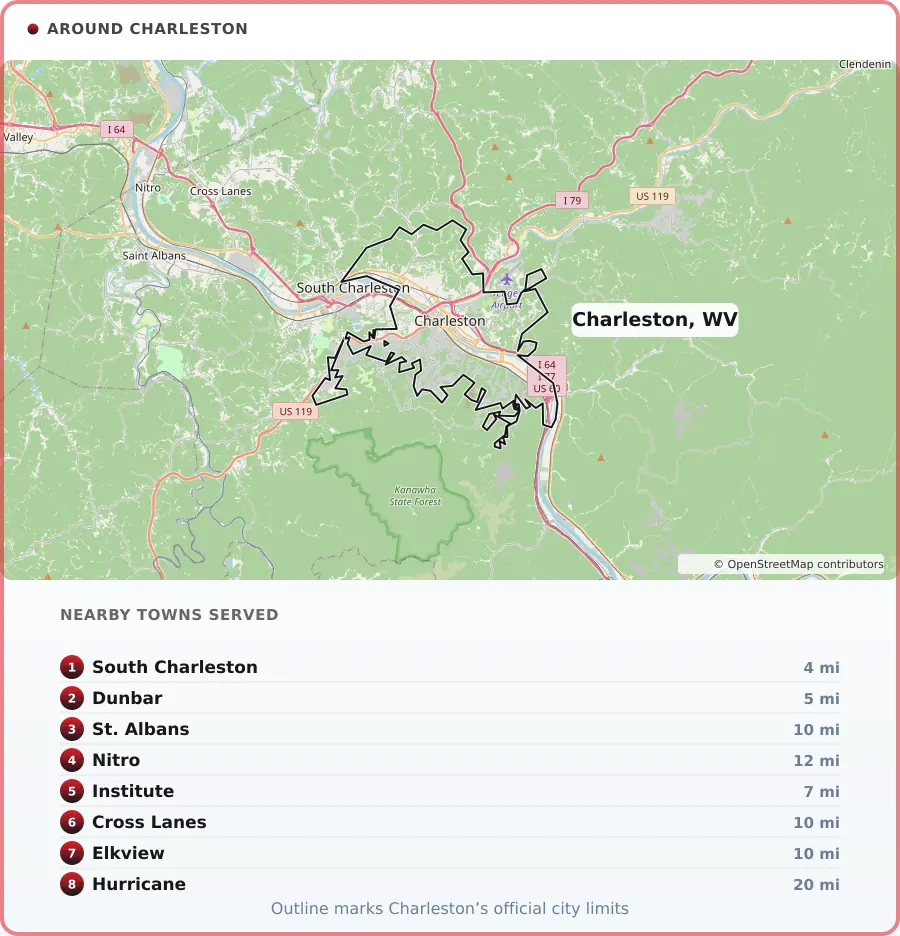
Charleston, WV is the centre of the service area, which extends to 8 surrounding towns. The map shows how far that reaches.
Charleston, WV Information
Tucked where the Elk and Kanawha rivers meet, Charleston, WV serves as both the state capital and the economic heart of the Kanawha Valley. Government offices and institutions like CAMC anchor daily life here, while a long-standing industrial corridor along the river keeps chemical manufacturing, energy, and banking woven into the city's identity. Appalachian Power, City National Bank, and the University of Charleston add further steady footing to a workforce built on public service, healthcare, and education.
With roughly 46,536 residents, Charleston feels like a city that knows its neighbors—from the quiet streets of South Hills to the riverside rhythm of Kanawha City. It's a place shaped by hills, water, and a working history, where small-town familiarity meets capital-city purpose.
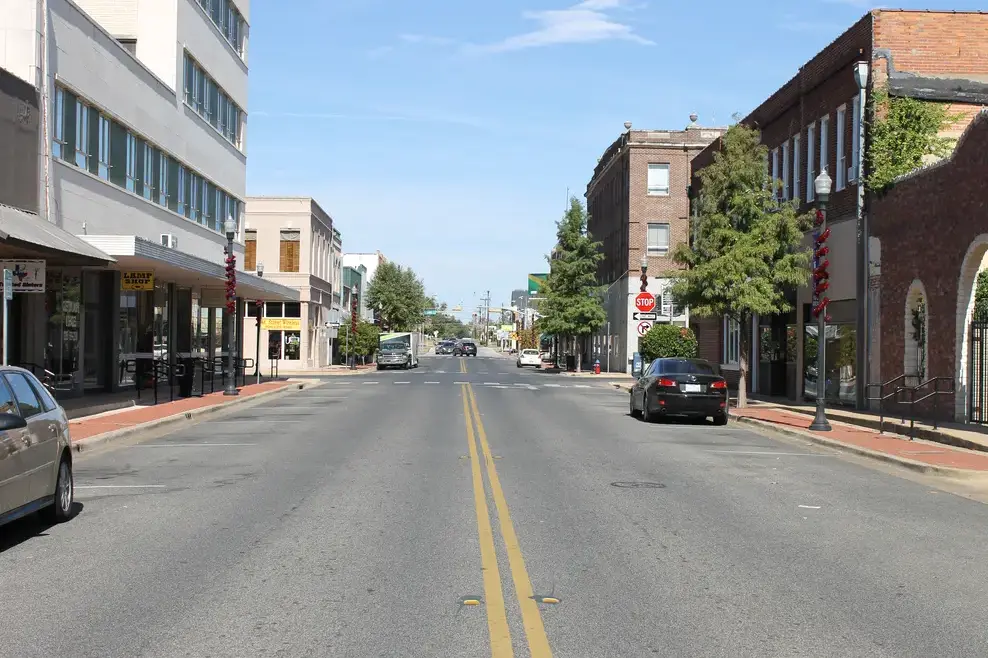
Photo: Billy Hathorn, CC BY-SA 3.0